
Services / Agentic AI
Useful intelligence. Human control.
We help teams assess and implement AI assistance and workflow automation around a defined business task. Our work includes personalized planning in ShapePilot and the AvicennaIQ assistant. Multi-step agents are scoped separately, with permissions, evaluation and human approval built into the implementation plan.
Discuss your workflow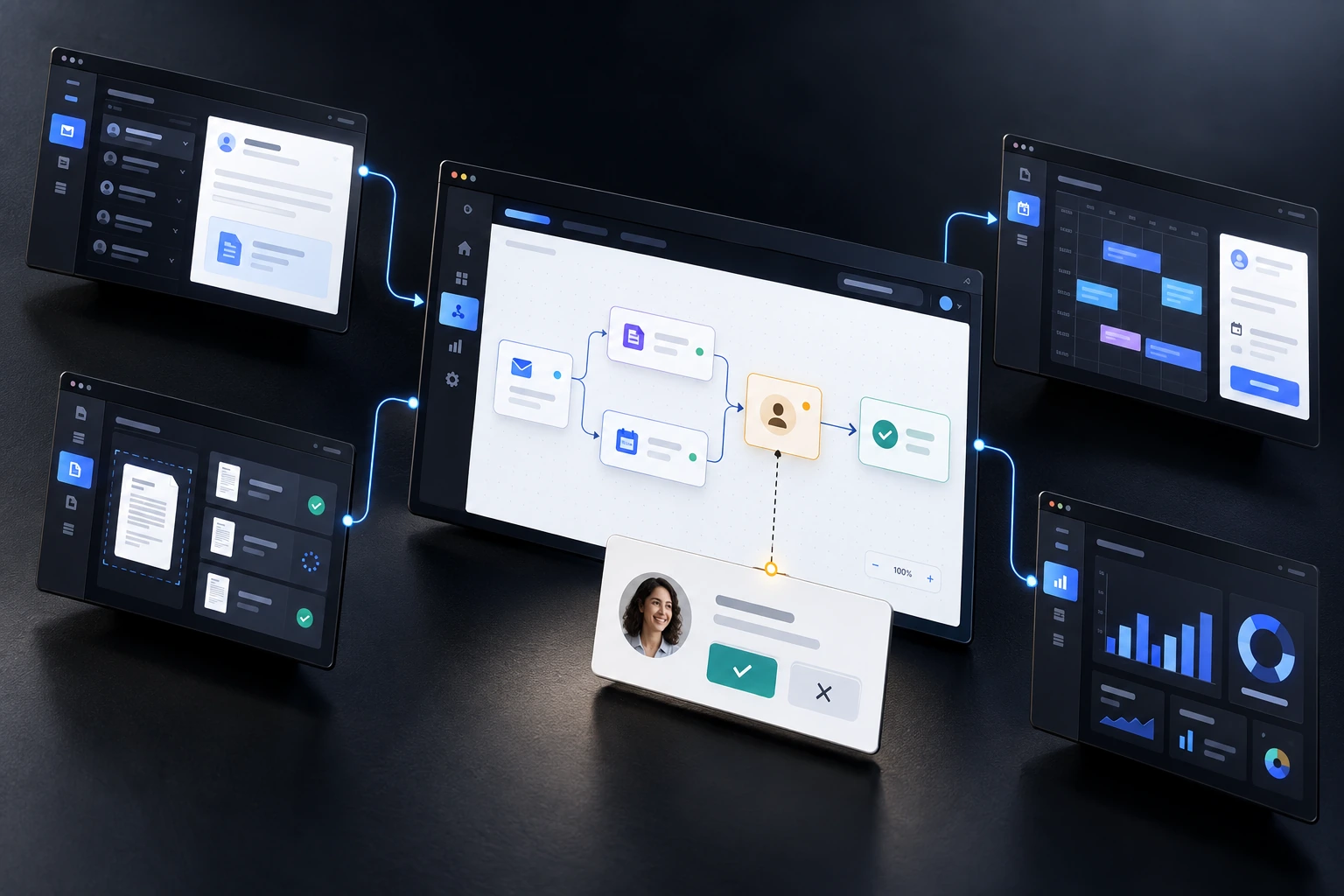
Agentic AI · Defined tasks, reviewed decisions
What we can deliver
A useful task before an autonomous system.
Find the right workflow
- Map repetitive tasks, exceptions and handoffs
- Assess data quality, access and feasibility
- Agree measurable acceptance criteria for a pilot
Connect with boundaries
- Assistants and knowledge-retrieval experiences
- APIs and tools with explicitly scoped permissions
- Human review before consequential actions
Evaluate & support
- Test normal, ambiguous and failure scenarios
- Define logs, escalation and fallback behaviour
- Agree monitoring, operating costs and support
Relevant work
See it in practice.
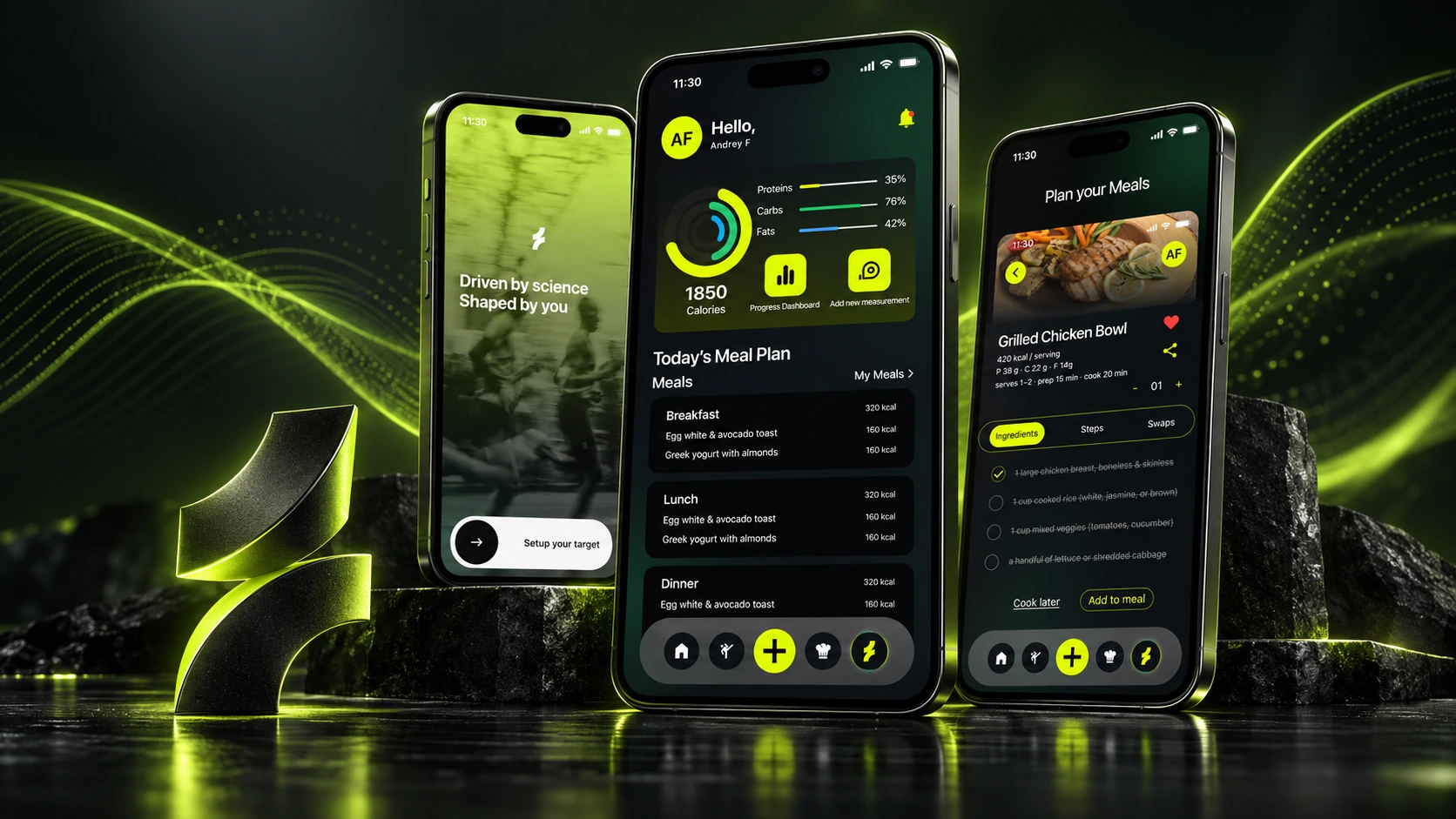
ShapePilot
A released fitness product with goal-based workout and nutrition planning. This is documented AI-assisted personalization, not a claim of autonomous business-agent deployment.
Explore project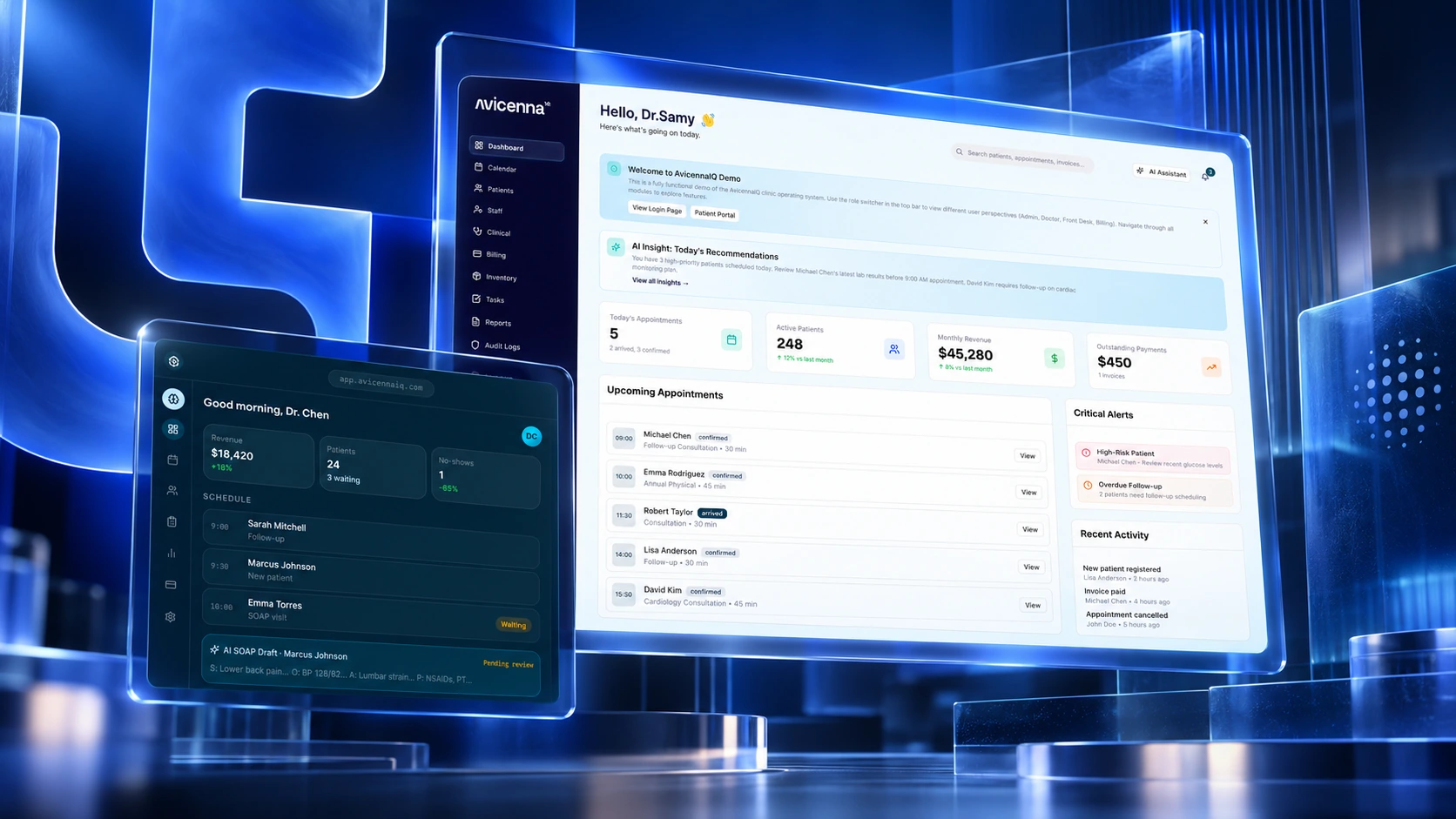
AvicennaIQ
A clinic product with an assistant experience alongside operational dashboards. It illustrates AI assistance within an application; access and clinical decisions remain subject to the product’s operating rules.
Explore projectThe problems we solve
Where assistance can make a difference.
Information is spread across systems.
We assess which sources an assistant may use, how they stay current and when a person should verify an answer.
Manual handoffs slow a repeatable task.
We map the steps and exceptions before proposing automation. A bounded workflow may be more suitable than an open-ended agent.
A promising demo needs an operating plan.
We separate a demonstration from a production deployment: access, evaluation, ownership, costs and support all need agreement.
How we work
Discover. Prototype. Evaluate. Introduce.
- 01
Define the task
Identify the users, source information, permitted actions and the decisions that must remain with a person.
- 02
Build a bounded pilot
Connect only the agreed data and tools. Make review, escalation and failure states part of the experience.
- 03
Review the evidence
Test representative tasks against agreed criteria, including incorrect inputs and missing information. A demo does not establish production readiness.
- 04
Plan implementation
Agree deployment responsibilities, access controls, monitoring and ongoing support before wider use.
Before we begin
Good questions.
Do we need an agent or ordinary automation?
A predictable workflow may be better served by rules and integrations. AI can be useful when a task involves interpreting information, but it also introduces uncertainty. We start with the task, available data and consequence of an error, then recommend an appropriate level of automation.
Can an agent act without approval?
Permitted actions and approval points are defined in scope. Consequential actions should have appropriate review and a way to stop or recover the workflow. We do not assume unrestricted access to your systems.
What data and integrations do you need?
Only the sources and tools required for the agreed task. We review API availability, permissions, data sensitivity, provider terms and how information is updated before confirming integration scope.
Are the examples autonomous AI deployments?
ShapePilot and AvicennaIQ demonstrate documented AI assistance in products. They should not be read as proof that a multi-step agent has been deployed for every proposed workflow. A new agent engagement begins with its own feasibility assessment and evaluation.
What determines cost and support needs?
Task complexity, integrations, evaluation, expected usage and human-review requirements all matter. Model or platform usage, hosting and support responsibilities are agreed separately from the initial implementation.
Start a project